Thursday, June 5, 2014

Play It to Beat It: An Ethical Analysis of Independent College Counseling

(Gloria Breck / Mr. Nguyen / AP Language and Composition P7 / 20 May 2014)

Note: To make sense of the whirlwind that is college admissions, I wrote an ethical research paper on an issue that I've been pondering all year: independent college counseling. I was a staunch opponent of the practice until I began to really research the topic. In this essay, I neither heartily support nor condemn independent counseling; instead I seek to qualify several points of view, bring to light the dilemma faced by my peers and their parents, and apply several philosophies studied in AP Lang to a relevant issue. While this paper may seem at times to be full of factoids (generalizations about Yale's admissions process, Katherine Cohen's characterizations of competition), I sifted carefully through studies conducted by credible counseling organizations for information that they deemed to be truth.

The admissions process is much like a business deal: to the best-marketed student goes the seal. Cavemen use to battle over berries, and modern students engage in a variation of the ancient fight, clawing for slots at schools that have been shown to equip students with the most potential for acquiring those same local, organic berries. To cope, communities turn to the expertise of college counseling “academies” to maximize their chances. Like fungi, these centers spring up in bunches on Bay Area boulevards, subsisting on the fertile “brain market.” For a certain sum, parents can conquer the college admissions quandary. Thus, a debate emerges between aggressive students on either side of the academy door: those who pay for assistance, and those who clobber together shanty-applications without third-party support. However, even members of The Resistance cannot deny that times have necessitated independent college counseling for applicants seeking to maneuver, and eventually mold, their competition.

A New Need for Counseling
In decades past, the college applications process was a simpler animal. But as the population balloons, so does competition. Saul Lelchuk, director of HS2 Academy’s Northern California branch, emphasizes that “the admissions landscape has changed, drastically and dramatically. To feel nostalgia for an earlier, simpler time is fine, provided one is willing to acknowledge that that era is behind us, for good and for bad.” Acknowledging a new era means equipping oneself for the impending task, using all available resources, including independent counseling services. Confounded with increased competition are factors such as affirmative action and legacy: having a parent attend Stanford is equivalent to a 45.1-point bump on the SAT (Lee). Yale judges three-quarters of its applicants qualified for admission, and relies on the litmus tests of legacy and affirmative action to separate the 8% percent from the rejected. These twists ensure that students have no power in controlling college outcomes, despite their qualifications.
What to do, then, if admissions officers follow no formulas? Applicants with advisors squash soloists with ease. At HS2 Academy, counselors begin grooming applicants as early as their eighth grade year, for “from the moment a student enters high school, everything they do—or fail to do—affects their likelihood of making it into a good college,” writes HS2’s founder, Ann Lee. Counselors arrange four years’ worth of course loads, summer schedules, and extra-curricular activities, all catered to the student’s unique background, goals, and propensities (Lee). The modern college application process no longer consists of simply filling out forms before deadlines; counselors seek to cultivate persons that completely close the gap between potential and performance, and to eliminate as many variables as possible in the success equation.
Katherine Cohen, empress of Manhattan college counselors, summarizes the current climate of college admissions by remarking that "[applicants] can't just wing an application and get in; [they] might have been able to do that twenty years ago if [they] had the grades and the scores.” Getting a student into a school that he would have been overqualified to attend twenty years ago is, in her words, “a feat roughly equivalent to resurrecting the dead.” Generation X is convinced that they would not have been accepted by their alma maters as applicants today (Finkel). Because the line that separates admits from rejects is “necessarily arbitrary,” only independent college counselors, most of them ex-admissions officers, are fit to maneuver the dizzying marketplace that is the college admissions process.

Not All Counselors Are Created Equal
Both private and public schools offer college counselors that have the power to vie via phone call for their students, while independent counselors are denied college contact. However, independent counselors are preferable to both, for reasons specific to each.
Public-school counselors, drowning in seas of 300-1000 students each, are simply too overwhelmed to be of much aid to an applicant. Thus, phoning colleges is a privilege wasted on inundated school counselors. With this in mind, Lelchuk finds the contempt for independent counselors illogical: “[public-school counselors] can be trusted to fill out a recommendation for a student (even if they have only met that student for the requisite ½ hour or hour throughout four years of high school) while we [independent counselors] should not be allowed within ten miles of an application even if we’ve been meeting with the student multiple times a month for the last six months or year.” Truly, independent counselors paint more honest portraits of their client, yet their interference -- if discovered by admissions officers -- renders applications suspicious.
On the other hand, private-school counselors charge exorbitant tuition for the same quality of services offered by independent counselors. Lelchuk notes that his “counterparts at the best private schools can, and do, pick up the phone – except the catch is that to attend these selective institutions you can often count on paying upwards of $30,000 per year to do so.” Harker Academy Upper School, which charges $40,500 per term, sends significantly more students to elite schools than the local public schools do (Lee). The distinction does not lie in their quality of academics, but rather in their low student-to-counselor ratio. HS2, C2, and Flex Academies, which serve the South Bay, offer comparable services for an average of $2500 per year (HS2). The astronomical price of a private-school education confirms that students do “buy their way into a meritocracy,” as told by Katherine Cohen. While independent services are also costly, they are far worthier investments for communities that can afford them.
With potholes marking both public and private pathways, independent counseling is the applicant’s “golden mean,” Aristotle’s middling of two extremes (Aristotle). Lelchuk confirms: “as for private counselors, we’re caught between the two.” Third-party counselors save students both their tuition and their chances. The regret described by Columbia University student Carla Buccino plagues private-schoolers: “We like to think we’re all here because we earned it. But many of us are here because we could pay the price of admission.” Public-schooled students who endured applications alone oft wonder what could have been had they counseled independently. The most moderate solution lies in those sterile, testimony-plastered office buildings along De Anza Boulevard.

All for One, Not One for All
Independent counseling, as a service industry, ought to have the best interests of its clients in mind. But as with all businesses, profit is the primary goal; a happy college outcome is a pleasant side effect. This exchange is most successful under a few conditions laid out by Eli Finkel and Grainne M. Fitzsimons in The New York Times: “When the recipient clearly needs it, when help complements rather than replaces the recipient’s own efforts, and when it makes recipients feel that we’re comfortable having them depend on us.” If the act of counseling fulfils these requirements, then the transaction is considered fair.
But profit, as an incentive, is an impurity. It prevents hired counselors from exercising goodness without qualification (Kant), and taints their good-will, which in fact extends beyond success-security into what Lelchuk calls “the eternal Sisyphusian struggle of convincing families to look past the rankings, past the glossy brochures, at which colleges are actually right for their children.” Counselors intend to influence not only admissions decisions for the better, but also worldviews. Still, this good-will is disqualified by monetary compensation.
Also, college counseling does not satisfy Kant’s categorical imperative, because its effectiveness hinges on its exclusivity (Kant). If the practice were adopted by all, then private counselors would be as available as their public-school equivalents. With every student is marketed to perfection by a counselor, admissions officers would not be able to identify the best buy (Gardner).
Aligned with Kantian ethics, however, is a dedication to the integrity of the “means,” no matter the “ends.” In The Foundation for the Metaphysics of Morals, Kant writes that “the good will is not good because of what it effects or accomplishes.” Counselors are as powerless as their clients at effecting certain results. Lelchuk admits: “Sometimes I’m successful in these efforts; many times I am not.” Despite the odds, counselors proceed with the gamble that is college admissions, aware of potential lawsuits filed by dismayed parents come springtime.

Not All Counselors Are Created Equal II
To dispel rumors of deceit, the Independent Educational Consultants Association released a set of ethical guidelines: “A member’s primary obligation is to assess, make recommendations for, and represent each student accurately and fairly based upon a professional evaluation of the circumstances.” Interpretations of this code vary by counselor, depending on their geographic location (Jaschik).
Critics are most skeptical of essay-editing services. IvyWise, a high end counseling service in Manhattan, affirms that “while we do not write essays for students, we do make detailed suggestions for content, structure, style, tone, vocabulary and spelling. We review, comment and correct subsequent revisions until the student and counselor agree the essays are in optimal shape for submission." Most would agree that aforementioned process would result in a voice not entirely belonging to the applicant; indeed, IvyWise essays are the children of combined minds.
Across the country, HS2 displays fewer tendencies to hoodwink. Their tactics aim to calibrate an essay to a single authoritative taste. Ann Lee, founder of HS2, finds that first drafts “careen like pinballs, sent one way by the casual comment of a teacher, another way by the stern direction of a friend’s older sister who goes to college somewhere and is therefore an unmitigated expert on all things collegiate.” Students wavering between conflicting criticisms would benefit from a single, solid assessment by a knowledgeable counselor. Such an approach leaves fewer opportunities for artificiating personal statements.


By-Products Justify Practice
The fruits of independent counseling are not at all limited to admission. In every essay-editing session, counselors see opportunities to apply the old maxim of teaching a man how to fish, instead of giving him one to eat (Lelchuk). Instead of penning essays for their clients, counselors teach the art of writing. Mastering clear communication, especially on a subject as elusive as the self, will serve students at every stage.
Also, counselors open avenues for the development of latent talent. Virtues, after all, are honed through learning and practice (Andre), two tools passed from counselor to client. Yes, a neuroscience internship handsomely accessorizes an application, but also contains immaterial worth. Counselors mine for these experiences: “I guided [a client] into an opportunity that she wanted but might not have known was out there. So, no, I don’t think that I obscure character. I like to think, rather, that I help display what already exists in a nascent stage,” writes Lelchuk. To focus a college education, counselors advocate early exposure to programs that correspond to one’s passions.


Cumulative Leaps
In an interview, Katherine Cohen noted tersely that “it’s never going to be a level playing field.” Growth and interaction of populations shift peaks of prosperity and redistribute equality constantly. To cope, virtue ethicists draw “certain ideals, such as excellence or dedication to the common good, toward which we should strive and which allow the full development of our humanity.” Ethical college counselors act in accordance with this framework. Also, in weighing the net positives and negatives of the practice (Mill), one concludes that college counseling increases accessibility to education more than it does eliminate opportunities for others, and therefore receives the utilitarian stamp of approval.
Ultimately, colleges admit those whose applications confirm their “pre-destination.” Lelchuk writes that “the gratification lies not in getting an undeserving slacker in... it stems from seeing the system of higher education working the way it was designed to work, accepting students who will – given the right resources, instruction, and environment – prove a credit to their college both on campus and beyond.” College counseling propels driven students to positions from which they are poised to optimize humanity’s well-being.
An admission is legitimized by the actions that follow it. What a student makes of their undergraduate admission, and every admission that follows--to graduate school, a company, a relationship--is what truly matters.

Works Cited:
https://docs.google.com/document/d/1EZXmpb4_KWzEnIiOWaKu4MVheQ7QWbYKi1Y7a0doZ30/edit

Friday, May 30, 2014

The Battle of Lexington and Concord Grape Jam: The Revoculinary War

Making up for many empty weeks! Here's a (ridiculous) paper that I wrote this year. Thank ye, high school, for squeezing the strangest sentences out of me.

The Anglo-American feud persists to this day. It lives on in traffic laws, economic schools of thought, and literary loyalties (to Rowling or Collins). “It’s the rebellion, darling,” hums my English neighbor, whenever she encounters a misspelling of “grey” or a mispronunciation of “garage.” The English display maturity in all matters of culture, and flaunt it in tabloids and television. Seeking the secret to their stiff-lipped soul, I sampled from the bouquet of British offerings the scrumptious BBC Food Channel. Extensive research affirmed that TV-chef allegiances ought to lie across the Atlantic, where culinary programming of an artistic quality seeps into lucky living rooms.

When one flicks on the telly, they expect an escape. Why, fellow Amuricans, remain steeped in our all-too-predictable, unspiced culture? Why settle for the predictable scenery of Malibu and suburban Connecticut when there waits swaths of Essex countryside piped with hares and hobbits, or Dickens-esque sunset profiles of the London skyline; for the limited inflection of American accent, when there waits the Scottish lilt and Cockney cackle? Those of us who are couch-chained revel in one-hour invitations into foreign kitchens. Thus, a transfer to Team UK, purely for scenic purposes, is in order. There’s no competition regarding overall quality of cinematography; while American producers dwell on details of hair and makeup, British shows devote those energies toward manicuring sets: no gleaming copper pot nor solitary chopstick is out of place. Those enveloped by the world of Harry Potter, Game of Thrones, Chronicles of Narnia, Spice Girls, Bridget Jones, and other Anglophilic indulgences would only benefit immensely from a tasteful trip across the pond; ‘tis a continuation of fictional forays. At last, they may solve for themselves the mysteries of pasty vs. pastry, and learn to assemble Harry’s favorite treacle tart.

In addition to extensive culinary training, the average British food star possesses an impressive record of academic achievement. The flamboyant Nigella Lawson has an undergraduate degree in Medieval and Modern languages from Oxford University, as shown in every show. While most TV chefs inject childhood anecdotes about watching their Nanas assemble pierogis, Nigella folds an Middle English history lesson into every episode, just as she folds egg whites for meringues. The viewer simultaneously improves in two aspects of culture, both crucial for survival and thrive-al. While tales of Giada’s Aruban vacay and Ree Drummond’s soccer potluck are at times enlightening, the true Epicurean derives pleasure from all sources, especially the font of knowledge. Drink up, I say -- a simple conversion of cook-loyalties admits thee to a higher class of culinary intelligentsia.

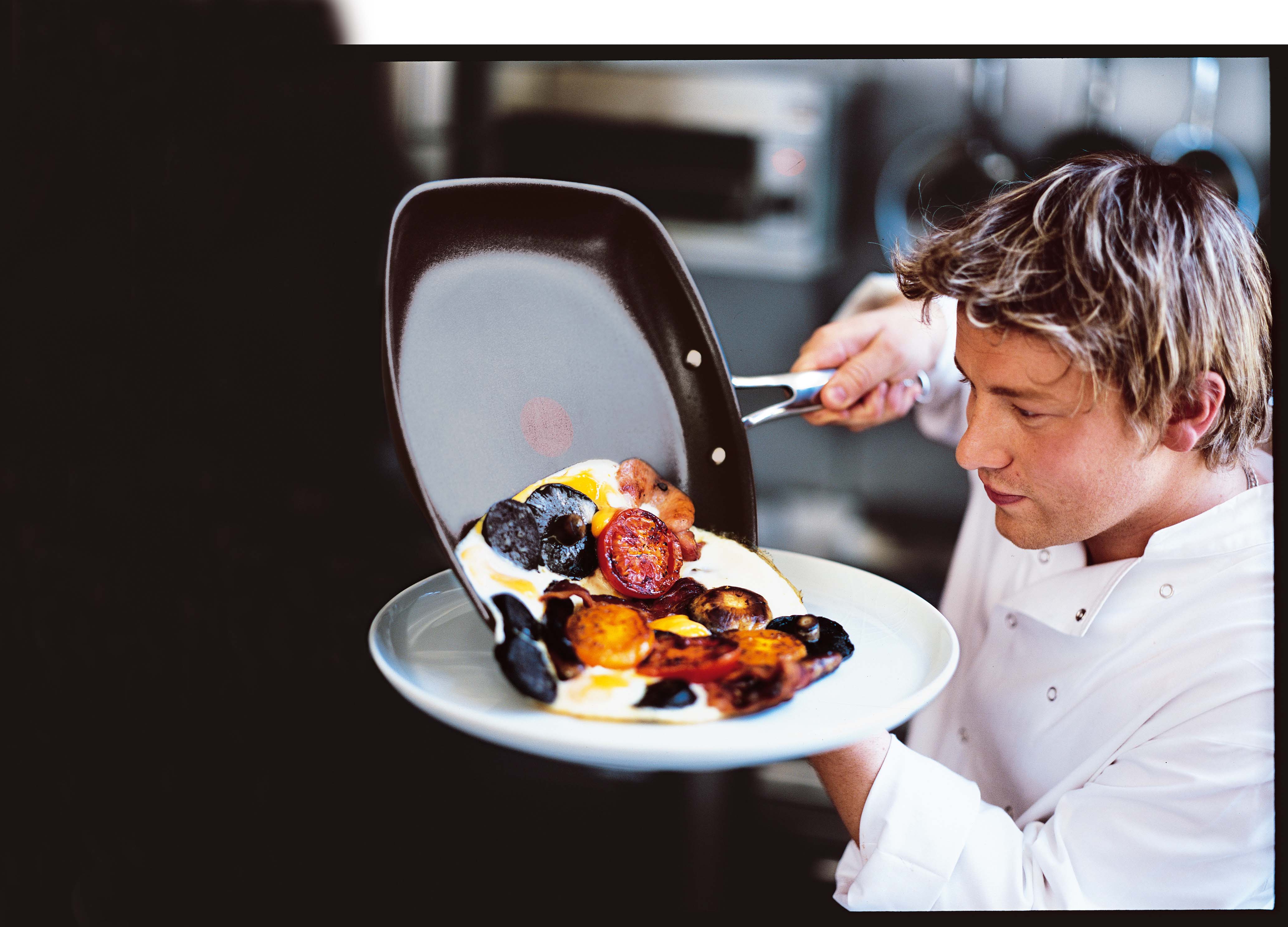
Aesthetically, BBC chefs take the cakes. Nigella Lawson, the “Domestic Goddess,” is famed for her glossy chestnut ringlets, pearlescent porcelain complexion, eyes the size of vacuoles, and a voluptuous figure to shame all voluptuous figures (which she dresses accordingly). At his prime in the mid-nineties, Jamie Oliver achieved heartthrob status; herds of teenage girls tuned in weekly to “The Naked Chef,” misled by the title. Jamie, at the tender age of nineteen, resembled a golden retriever, with his scruffy yellow bangs and large pink lips, clad in flannels and an apron. His motorbike, which he dismounts at the beginning of every episode, creats a fascinating contradiction between country lad and bad fellow. Gordon Ramsay is the Lion King of chefs: his tousled sun-kissed ‘do, burnished peel, and Scottish-ringlord stature elevate him to Adonis-hood. Flubber is more fairly distributed among the British chefs, while Ina Garten and Paula Deen, friendly pear-matrons of Food Network, are over-blessed with it. However, judges of the aesthetic contest must consider Malibu-based TV chef Giada de Laurentiis, daughter ofItalian film stars, whose looks put most A-listers to shame. Still, the British crew of culinary communicators has greater net attractiveness. These chefs’ marriages verify their pulchritude: Jamie Oliver married a supermodel called Jools (retainer of a svelte silhouette, even after fourteen years of taste-testing), and promptly produced four children (with organic names like Buddy Bear and Daisy Boo Pamela). Nigella Lawson pocketed London’s foremost art collector, Charles Saatchi. Attention to appearances extends to cookbookery: the collected works of Jamie Oliver and Gordon Ramsay surpass those of Rachael Ray and Wolfgang Puck in font selection and margin width.

As usual, our friends across the pond display deeper mastery of the English language. American audiences must settle for contractions and vagaries, while British chefs treat their viewers to slews of literary devices. TV, oft-scorned as an intelligence-sapping pastime, regains its credibility under their stewardship. In each of her episodes, Nigella Lawson employs many a magnificent metaphor (she refers to al dente linguini as “golden tresses,” evoking images of Rapunzel and Debussy’s Girl with the Flaxen Hair), encouraging her disciples to compose poetry as they wait for butter to brown. Gordon Ramsay subscribes to the proverb “Give a man a fish, feed him for a day. Teach a man to fish, feed him for a lifetime.” His instruction is laced with pieces of technical advice that transcend recipes; that seek to make thinkers from automatons. Jamie Oliver’s famed monologues are equally substantial: each food lesson carries a lesson on living with it, as easily as butter carries alliums. While certain American chefs (Alton Brown, mainly) may be praised for their concision and wit, most of them flounder and ramble, baby the watcher, and run out of synonyms for “Delicious!”. Sandra Lee, hostess of Food Network’s Semi-Homemade, suffered a bout of aphasia when she described a crumbly cupcake as “juicy” -- one (amusing) verbal misdemeanor among many. In stark contrast, the British Cooking Crew, armed with assurance of the ages, stirs up food for thought in addition to digestion.

Like European concert pianists, British TV chefs have mastered a wider repertoire than their American counterparts. The culinary forays of Bobby Flay are confined to Texan barbeque, and Giada de Laurentiis seldom ventures beyond Italian-Californian fare in shades of bisque and green tea. When American chefs carry their enterprises abroad, they are met with disinterest: celebrity chef Guy Fieri’s American Restaurant and Bar received scathing reviews from Parisian critics, a suggestion that the American culinary canon is ill-suited to international audiences. True, British chefs rely on centuries of European culinary tradition to back their expeditions, but none take their gastronomic heritage for granted. Jamie Oliver, at his young age, has opened fifteen restaurants internationally that feature Pho, foie gras, and everything in between. Instead of dulling their taste buds on various permutations of hamburger, viewers of British food television sharpen their worldliness.

The two schools of cheffing differ most, however, in their aim. American cooking shows maximize convenience, speed, ease, and satisfaction-factor; land and resource-challenged British chefs are keen on nutrition-dense diets and the local-food movements. The Food Network recipe index is bogged down by excess salt, vegetable oil, cornstarch, and red meat, perennial staples of the American diet. Jamie Oliver et al firmly espouse nutrition-centric choices and have carried their campaigns to America, where the obesity, diabetes, and cancer epidemics tear through helpless civilians. With an emphasis on whole foods and streamlined preparation, Oliver strives to make healthful eating mainstream, and has given TED talks on and dedicated primetime hours to his quest. Jamie’s Food Revolution has already transformed British school lunches, and is currently probing into West Virginia and Los Angeles. The transition from the decades-enforced American diet to a cleaner one is messy indeed, but worth every droplet of blood, sweat, and sauce, according to friendly neighbor Jamie Oliver.

With stellar cinematography, backgrounds, looks, instruction, repertoire, and intentions, English cooking shows out-do their American counterparts, and continue to out-do themselves with every season. Offering substance where it is seldom found, satisfying hunger for knowledge as well as adenosine triphosphate, subliminally converting munchers of crispy chips to “crunchies” themselves -- too many clauses adorn foreign food programming. When next presented with the opportunity, swap ice-water for tea, and cozy up with a new foodie friend or two. BBC Food lies just a thumb-flex away.

our moving castle, part 2

A study of families. Of people and how they fit together. Samuel, stony, stayed at home while the rest of us drove 1 hour to the still blue sea of Qingdao. There really was no wind! The sky, the water, the buildings -- all were a dusty shade of blue. Conversation was sometimes still, too, and sometimes lively. Timmy was rejected 4 times by a lovely 17-month-old in a button-up bunny vest. We sang "The Wheels on the Bus (ba-shi)" to placate him. On the playground, Timmy very insistently told another toddler to stop crying.
4/2/14 Last night, we went to an extended family banquet in a an especially smoky banquet hall.
inside a banquet box
The banquet "boxes," I'll call them, hold over twenty people at a time. There's a gap in the chairs for the server to deposit dishes. We ogled the fish (were frighted by splashy eel) and settled into the box. Samuel and I stole away to a corner room to play Cut the Rope. The dinner: casually weighty inquiries, furrowed brows, the corners of mouths. I told Samuel that I disliked him and he left for a stretch. I tittered and grinned as usual, took toasts, emptied my golden glass. A distant aunt saved us teenagers from evening long "torment" by taking us to the night market.
First, a stop to a glossy McDonald's. Soft serve in hand, we strutted (with celerity) down the bookended road, stopping to smell tasty wares (BBQ duck tongues). Samuel bought a jacket with a checkered lining; Ariel and I bought accessories. Our guide haggled with expertise, and was generous with her gifts of companionship and pocket change. Afterward, she drove us around the posh New Town 五四 area of Qingdao, past Chiang Jieshi's old hideaway, down a tree-lined street. We sang along to T-swizzle, hen hao wan.
beautiful 嶗山
Good morning! We went to 嶗山, land of wise mountains, tea bushes, and blossoms. Of villages tucked in the crevices of room-sized wooden communal beds. There was a reservoir, quite evaporated, and a bridge that ran through it. Sam and I climbed down solo and shouted poetry (and soliloquy on S's part) (Frozen songs, too) into the echoey space and eerie quiet. 'Twas the best half-hour with Samuel, filling in his pauses. Green waters to match the mountain.
Ate at another classy banquet place (same walking menus) (great bao zi with shrimp and chives and eggs and crispy frills on the bottom). On the way there, had piping hot, pure white, a-dollar-a-bag 饅頭 (steamed bread), which we ripped apart with burning, eager fingers. Dinner "info session" for friend, a girl called May. Held at unbelievably luxuriant hotel buffet that boasted every edible that the mind can conceive (Anselm!). Between sips of Oolong tea, black walnut potion, and coconut milk, we younguns offered insight into American education as pertaining to immigrant/exchange students. We spoke thoughtfully and truthfully, I hope. Sam ever truthful.
happy in the countryside :)
Ariel put towelettes on head. I babbled to poor May in my eager, chirpy way--probably deterred her... Launched conversation on our experiences thus far, especially the differences between the rebel's and my own--truly varied by teacher. I am continually amazed by Chinese generosity--such a meal, in search of advice! I hope they received it. We drew pictures in the steamed-up window of the car that took us home. Than you God for a beautiful day.
4/3/14 Thursday. I played piano in the morning--tried to finish Fugue. Samuel came to visit (that welcome doorbell!) and off we went to find him a proper brunch. 'Twas cold, so we buttoned to the brim. Bought an XL 韭菜盒子 and settled down in kitchen to reat for a moment (2 visitors!) before the kind auntie from the night before whisked Ariel and me to Koreatown, 40 mins to the north, still in Qingdao!
First stopped for a snacklet of duck tongues, squid, and fu zhu (much love for fu zhu) and then settled into smoky Korean shop. We had our own tatami-esque room! Every two minutes, the waiter
quintessential night market
slid open the door and deposited a new dish. Quite heaven (great grammar Glo)! Spicy, countered by matcha tea milk in trapezoidal bottle, carried by ever-present smoke. We ate no less than ten pounds of bibimbap, beef stew, seafood pancake, cold noodles, and BBQ meat, us three little ladies. Walked it off at the [Trinket Center] for 3 hours. Ariel had pandas painted on her nails by a lovely, soft-spoken artist with a four-year-old at home. Smoke, clothing streamers, curtained outlets of flourescent clothes. The Ayi has incredible bartering abilities indeed: reduced prices by 90 percent. Shopped 'til dropped!
Returned home, read Atlantic in nook because Samuel was out finishing his interview of great uncle. Nai nai walked in and gave me a turquoise bracelet. More piano, the last one :(. Gave Easter eggs to the kind neighbor and wished her a happy 復活節, danced with Samuel, and had last supper in Qingdao. Much dumpling (fish, hurrah! lovingly assembled by Samuel's two aunts), beer, and picture-taking. Happy cheers and blessings all around, including one from S to grandmother (謝謝妳的愛) and rhyming ones from Ariel. Portraits extracted, as were last words. Harried packing.
goodbye, beautiful Qingdao
Friday morning: breakfast of clam flour-drop soup, photo album on way out door. Little family of 5 + me escorted by fun auntie's husband (they both work at the airport) after farewells. Some half hugs for me :,) and an attentive last car ride through Qingdao, past Commie slogan sculptures (by the way, Qingdao is one hour away form North Korea). I tried to press colors into my mind--light bluish grays; a pastel, dusty, sea-salt sheen covering everything, the iron-barred window guards. So long, love, 大妹兒. This place felt like a home, with its grout and Buicks and toddlers and trash and genuine grins.


Saturday, May 10, 2014

our moving castle, part one

China, in chapters. Transcription of journal entries from March 27th to April 14th. Many messy words and minute details (see meals), but thought that they had to be told to some one. Endless thanks to the Liu family for the trip of a lifetime. 

3/27/13.
midnight arrival in Qingdao
I couldn't sleep last night. I had the chasing dream, the one in which the large, muscular, inescapable man hunts me, to kill. But when I woke up, the morning was a beautiful one indeed. The trembling, quandarious night always unfolds into a half-lidded, loving morning, light and white. I stretched time, 8:30 to 11:30, by making pancakes and braiding my hair. Then I slathered my parents with "I love you"s, enough to last them for two weeks. For our time remaining is so little, and the hours of contact during the day so scant. But my departure grants us fewer hours than normal.
Then I saw Samuel and Ariel and Mr. Liu, and in no time we were at SFO, in all of its light-blue, sine-curve glory. After a smooth passage through security, we settled into a Japanese restaurant. The sushi (shrimp tempura, unagi, avocado) was quite delicious (avocado soft!), and the ramen had a pleasant chew and a soup with depth. Samuel had crispy chicken teriyaki, and our orders were echoed by the company opposite. It was at this nameless eatery that Samuel and I frantically refreshed pages and rooted through emails for passwords to college portals on wifi that was otherwise occupied. My heart accelerated as the letters loaded -- two rejections (kindly phrased in "not able" w/ sorries). I was numb for a while, until we boarded the plane (which we held up -- arrived 5 minutes before posted take off time). As I sent an update text to Mom and Dad, the stupid tears with minds of their own trickled down, as thought I had to type the news to know it. Well, I know it now, I know it truly, and I do not resent it. I move along, phased, but re-phaseable. I hope my parents are too. 
There's not much to say -- I don't want to revisit that heavy, tired state following rejection. Somehow, with a half-hour, God -- working through His people, past and present -- has made all whole again, and hopeful. I trust in His plan, even when I cannot make out the path and width, and rejoice for others as they walk along theirs. Now I have certification from these schools, replies that do more than sit on the shelf and fade to insignificance, but instead move one to action every time I lay eyes on them. There's more to do, there's always more to do, and right now there's a little more than usual, as usual. It's all forward from here. Thank you God for amazing grace. Music of the day: Shostakovich Piano Concerto no. 1, 3rd movement (absolute exuberance), Barber Adagio for Strings (supplied by Samuel to aid mourning), Dusty Blue... And of course, the persistent hum of airplane that doesn't seem so loud anymore.  

3/30/14. 
Indescribable... How to recapture the last two days? They have been times of incredible joy, of new depths of insecurity, of comfort and loneliness, of warmth from all that I've met. I've opened email after hard-sought (on internet rations) email from colleges that, after thoughtful deliberation, politely said no. But every minute eases the disappointment and brings encouragement -- I had a dream of Middlebury, and [my classmate] was in it too, maybe because we are both not yet settled (his rejection quite affected me, I guess). But as I talk to Samuel's relatives, the more I love the idea of immersing myself in languages at Midd, of being able to communicate with all. [mushy thoughts] while sitting on the rocky Qingdao shore, we decided to decide without considering the other. But from shores opposite or near...
moveable feast
After exploring Kang Youwei's home (which featured his souvenirs from every continent), we scattered onto the sand. 大伯伯 took them to play volleyball. Then we returned home to steaming plates of fresh dumplings on 奶奶's round table, supplemented by all sorts of beautiful dishes crafted masterfully by aunts. I downed 14 dumplings (pork, too!!)!!!11 And they were velvet packets of garlic-soaked goodness. The more garlic you take here, the louder the approval. Garlic sauce is initiation, as is the beer.
The. Beer. Olala. The first full cup of beer (two, in fact) of my existence. And if you can't tell, I just had another one! Ah. I feel las a lovely, loose, goose. The ink flows from my potent pen!
Napped last afternoon, and rose to practice piano at the neighbor's flat across the floor. Her space was spotless, the piano pleasant and muggy voiced, as was the room steamy. Her daughter used the computer next to me while I ran through warm-up and Haydn, striving for spotlessness. My constance, my constance. Practiced 'til sweaty, then headed home for a meal of fried fish and steamed fish and ___ fish and more fresh dumplings. Ahhhhh. Slept at 9:30, like an infant.
it's a city by the sea
This morning, ate breakfast with newly arrived Timmy and handmaiden. Then we visited the cemetery: a manicured garden oasis in a concrete desert. The rocks, thoughtfully placed throughout, housed speakers which played soap-opera-soundtrack-style music. We placed flowers (I held wrappers) at the graves, prayed. They thanked God for his peace. We exited in paris. Whenever I partake in these happenings, I gain much-needed perspective, and the limited trials in my life take their proper place, but small instances of small significance (even Snapchat stories) knock me back into deep, catatonic doldrums. Thankfully, I wake quickly.
Church: at home. They sing and pray. Ariel and I sing in English and said 阿門. They were absorbed, focused, passionate. A circle of brothers and sisters, a link in the chain. Before lunch, Samuel and I walked up the road to the open-air market. Little kiosks spilt from every doorway, bearing black rice and crayfish and butt (of pork). We got a strawberry ice cream ("Breyer's!") and scuttled home for fancy lunch at teppenyaki place. 8+ courses (each an animal), sashimi, starfruit, ice cream buffet. A whole brick of yellow butter (I love oil) and giggles over handsome cheekbones, adam's appleses. New friend: his basketball playing added points to the college entrance exam. Sedated afternoon of nap and piano and browsing the blackish market, topped off by a dinner of clam soup (and a wee cup of beer). Samuel and I found a talking nook, a curtained extension where laundry is hung to dry. Two chairs, one rocks. A wide window through which Samuel shone a laser when he was small. Now, Timmy does. Samuel's dad shared reunion wisdom: look forward. Compare less. Give hope, and encourage old friends to be better than they were before.
Monday, fonday. After breakfast (麵疙瘩dumpling knots) I walked with 大伯母up the nearby mountain that Qingdao folk used for defense (little stone forts, tunnels, checker walls). People kicked hacky-sacks, did taichi, meditated. The air was cool, was warmed by walkers. Every few paces we admired the view: an old city, a new one, and the sea (white as the foggy sky). She held my hand and lead me along me like a mama. On the way home, we stepped into little markets, convened at home and headed for Koreatown, very silver and posh. Samuel recounted his great uncle's stories from that morning's interview as we went. Each store was lovely, soft, baby-toned, Korean. People demonstrated fitness bikes outside to loud K-pop. Ate gratifying Western meal at Pizza Hut (again, shiny and granite). 
Qingdao colors
Before schmoozing with oro, though, Samuel and I took another walk, in the other direction. Concrete jungle, cement rivers. Broken glass, abandoned high heel, stamped advertisements for graffiti. We watched loud elementary schoolers at recess play basketball, did air-walking at play structure (they're placed thoughtfully throughout town). An evening of 韭菜盒子,more nook, dancing with the small person, and Cloud Atlas. Ariel had a fever that abated by the beautiful morning. I write as they pray for breakfast.   

Thursday, March 20, 2014

the snail and the cuckoo / the stjepan and the luka

It came time for me to sight-read. Olya's daughters were joyfully and unquietly jumping on the trampoline; she rose from her stool and strode over to the sliding glass door to shush them. I turned to today's piece, called "The Snail and the Cuckoo," and took note of the usual suspects: key and time signature, tempo,  dynamics and accidentals (I love sight-reading, you see, because the first time is always the freshest).

Live stream (requiring excess ellipses): Time to deliver! 1-2-3, 1-2-3, nice and walky. Peculiar choice of notes, though, and wonky meter shifts... Oi, a tie! Forgot to hold it. A stifled stumble, and a giggle... from Olya. A giggle? My stoic teacher never lets slip a stray sound... No matter, proceed. Here's a crescendo... Grow, grow, carry it to the edge of doom... A snort, from Olya. Do I really sound that awful??

I bear the snail and cuckoo out to the end, enduring the poorly stifled shouts of laughter from over my shoulder. At times, I join in, my titters swelling to forte as well. Olya dabs her eyes with a tissue as I slump on the bench, mystified.

"What was so funny?" 
"Ha, uh hah! F-f-floating about w-without any form, hee hee, like gormless... Globs!" 
"Oh, so... the snail and the cuckoo." 
"Hee hee! I can't take it! I haven't laughed like this all year!" 

True, the notes plodded along pointlessly, and were scattered across the staff like spilt rice. This made my teacher laugh like a maniac. She went on to describe a concert from her youth, during which she laughed so hard that she had to leave. Until today, I only knew of music's power to move. Now I know of its power to move dignified matrons onto the carpet, where they roll. One day I'll get the joke.  

Now, on another, far cooler note, I share with you two treats from the 2Cellos: their newest upload, and an old gem that Julianne showed me :). These sorts of sounds spill off of the stage.


Saturday, March 15, 2014

pallindrome

 cracks in the plaster don't solve themselves.
Her glasses rest on a bed of burst veins. Her eyes, too, are framed by red wreaths. Her cheeks, ruddy as apples, porous as winter pears, fold into neatly sectioned curtains. They rest beneath a sheer veneer of powder. Her lucky nose is shaped like ancient currency, falsely indicative of prosperity. She looks upward, and I see cross-stitches of crimson. Still, she makes a smile for me.

Her sponsor says she'll burst, soon -- a wrathful grape grown heavy. The vessels in her brain will pop and seep; erasing attachments to us, self, God. Like her tormentor, she'll live on a mattress, unfruitful and irritable, trapped in a tiresome cycle, watching the toilet leak and irritate the paint downstairs. But she protests. She shouts back to her critic-confidant, then takes a pill, the same ones prescribed to her centanarian father.

It's the weight of fifteen years that rolls her shoulders forward, leaving a thick boulder where neck should be. Knobbed fingers reach for the crack in the paint. Back arches, boulder cracks. Then she hangs from to the deep indent of the life-line cut into her palms.

Rewind. She hangs onto the deep indent of the life-line cut into her palms.

The canister of diuretics flies into the waste-bin. She seeks a plumber for the leaky pipes in her body, nimble needles to knit them back together, a seamstress to smooth over crimson cross-stitches: he who knit her in her mother's womb.

Volatility dwindles so swiftly that she feels emboldened to approach him. She kneels by the mattress, brushes some hair out of way. A whisper, a nod. A vow to wake, after a moment's more rest. Now, she argues, and tears the crier from the crypt. The pair plunges once again into a sea of code and connections, special skills and speculation. While the grapes are young, they guard; at the peak of ripeness, they reap. The cycle reverses.

Her lips are limber and limpid; her glance glows white. Time tastefully fulfills her nose's prophecy, never granting excess, but heeding her need. There's a glow, matte and steady, that inflates the cheeks. Her eyes tuck away the yuletide laurels gules, and peer through patient lenses. Those eyes that watched the paint peel and broke free from trance.       

Friday, March 7, 2014

pastiche

Poetry: the premeditated overflowing of questionable emotions recollected in test-induced haste. Listen as you read :)


Ode to the Fugue
from the author's hearing Vivian play Chromatic Fantasy & Fugue in d minor.

I dreamt of an Abyssinian maid,
who on a clavichord played
a chromatic fantasy by Bach.

All that's best of loud and soft
Met in its tempo and its form;
A venerable fugue which with every turn
Denied attention to Keats' precious urn.

Over arpeggiated mountains and figured bass*
Pulsed a song of mellow grace,
as steadily as my darling's chest palpates.

Each note, precisely placed
to provoke contrapuntal motion,
A sunless sea of sonorous sounds --
Abluted by priests into a mellifluous ocean.

The subject** wandered lonely as a cloud
momently stumbling upon a host of golden cadences!
Softly I sank into this bed of cadential joy.

The swell of every mighty chord
struck my heart like Bruce Lee's foot a board;
As consecutive notes ascend,
urging in the end --
I tugged the fugue from Time!

But alas, after three minutes' war
The maid re-folded her hands
And the music slipped beneath fleeting dream-sands.

*characteristic of Baroque music -- the clear notation of harmonic progression over which a soloist improvises.
**In a fugue, the main melodic figure is called the subject.